

White House Proxy Networks and AI Impersonation: A New National Security Threat?
Cybersecurity & Technology | 6th November 2026
Cybersecurity researchers have uncovered commercial proxy services routing internet traffic through White House-associated IP addresses, raising concerns about how such access could be combined with artificial intelligence to impersonate senior US government officials.
Researchers from Layer3 Intel and Synthient identified 28 proxy services using six IP addresses associated with the Executive Office of the President between 5th October and 3rd November 2026. Such services could allow outsiders to make internet requests appearing to originate from the White House network for just a few dollars.
The discovery follows an alarming impersonation case in July 2025, when an individual used AI-generated voice messages and fraudulent communications to pose as US Secretary of State Marco Rubio. The impersonator reportedly contacted three foreign ministers and other senior American officials.
Could These Technologies Be Combined?
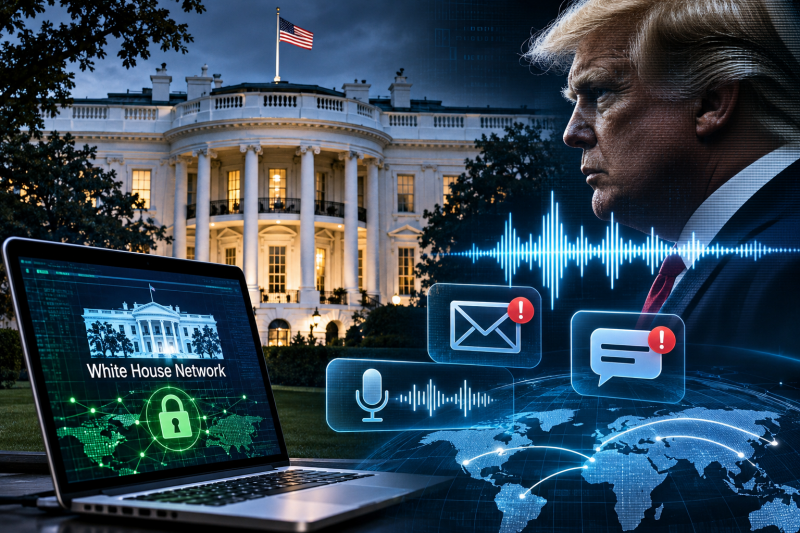
Consider a scenario involving fabricated presidential communications. An attacker creates AI-generated audio imitating Donald Trump, accompanied by forged emails, messages or voice notes.
By routing associated internet traffic through a White House IP address, the attacker could add another layer of apparent credibility. A foreign government, embassy or defence contractor might receive what appears to be an authentic presidential instruction.
Although an IP address cannot establish the identity of a sender or authenticate official communications, organisations relying on network origin as a security measure could potentially be deceived.
A Growing Diplomatic Security Concern
In May 2025, the FBI warned that criminals were already impersonating senior American officials using AI-generated voices and text messages to obtain sensitive information or access to accounts.
Combining synthetic voices, fraudulent communications and apparently legitimate government network traffic could create opportunities for intelligence theft, diplomatic manipulation or false instructions during an international crisis.
There is currently no evidence connecting the White House proxy discovery with the Rubio impersonation campaign, nor evidence that presidential communications have been forged using these networks.
Nevertheless, the separate incidents highlight a serious emerging concern: when artificial intelligence can imitate a government official and internet traffic can appear to originate from government infrastructure, verifying the authenticity of official communications becomes increasingly important.