Space Habitats & Human Survival
The Science and Technology of Living Beyond Earth
Human exploration of space is entering a period in which the development of permanent or long-duration habitats is becoming an increasingly important objective. Future orbital stations, lunar research bases and eventual crewed missions to Mars will require technologies capable of sustaining human life far beyond Earth's protective environment.
The International Space Station (ISS) has demonstrated that humans can live and work in orbit for extended periods. However, establishing habitats on the Moon or Mars introduces additional challenges, including radiation exposure, reduced gravity, extreme temperatures, limited resources and increasing distances from Earth.
Researchers and engineers are developing regenerative life-support systems, radiation shielding, advanced habitat structures, autonomous medical technologies and methods of producing essential resources locally.
Together, these developments could gradually reduce dependence on Earth and enable increasingly sustainable human exploration of the Solar System.
Designing Habitats Beyond Earth
Space habitats must provide a controlled internal environment while protecting their occupants from the vacuum of space, radiation, temperature extremes and potential impacts from micrometeoroids.
Orbital Space Stations
Orbital habitats operate in microgravity and typically consist of pressurised modules containing living quarters, laboratories, life-support equipment and docking facilities.
The ISS has provided decades of operational experience, including research into environmental control, structural maintenance, crew health and long-duration habitation.
Future commercial stations are being developed with greater emphasis on modular construction, autonomous operations and supporting both scientific research and commercial activities.
Lunar Habitats
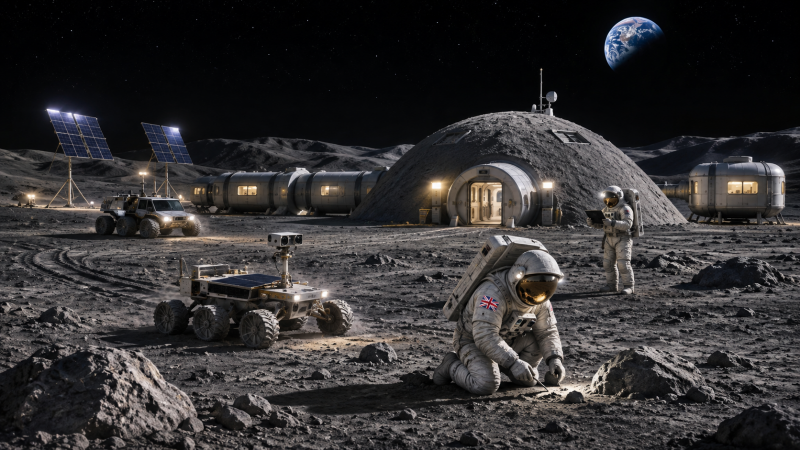
The Moon presents different engineering requirements. Its surface gravity is approximately 16.5% of Earth's, while temperatures vary dramatically between illuminated and shadowed regions.
Proposed lunar habitats include rigid modules, expandable structures and facilities partially covered by lunar regolith.
Regolith, the loose material covering the lunar surface, could provide additional radiation and micrometeoroid protection when placed around suitable habitat structures.
Researchers are also examining robotic construction, including the use of local materials to manufacture protective barriers and structural components.
Martian Habitats
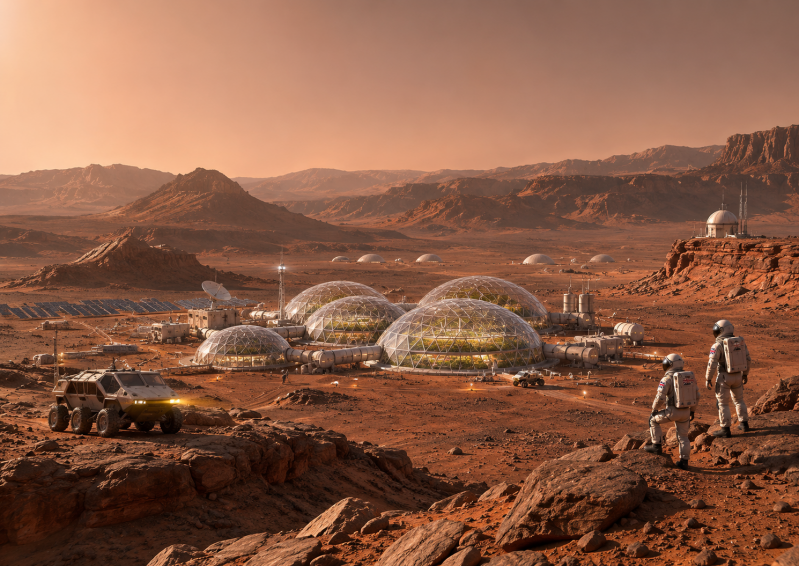
Mars offers approximately 38% of Earth's surface gravity and a thin atmosphere composed predominantly of carbon dioxide.
Its atmosphere provides some protection against incoming radiation but cannot support unprotected human breathing. Habitats would therefore require pressurisation, oxygen supplies, thermal control and protection against radiation and dust.
Potential designs include interconnected surface modules, regolith-covered structures and facilities constructed within suitable natural formations.
The development of reliable, repairable and expandable habitats will be central to progressing from short exploration missions towards sustained human occupation.
Life-Support Systems and Resource Recycling
A sustainable space habitat must continuously provide breathable air, drinking water, food and a safe internal environment.
Transporting every required resource from Earth becomes increasingly impractical as mission durations increase. Consequently, regenerative life-support technology is a major area of space research.

Oxygen Production and Atmospheric Control
Existing spacecraft systems can generate oxygen through electrolysis, a process that separates water into oxygen and hydrogen using electricity.
Carbon dioxide exhaled by astronauts must also be removed from the cabin atmosphere. Some systems can recover additional water by combining carbon dioxide with hydrogen through the Sabatier reaction.
Atmospheric monitoring also regulates humidity, temperature and potentially harmful trace gases.
Water Recovery
Water recycling is already an established capability aboard the ISS.
Wastewater from urine, atmospheric condensation and other sources can be purified through filtration and chemical treatment.
NASA has demonstrated technologies capable of recovering approximately 98% of wastewater under specific ISS operating conditions, substantially reducing the amount of replacement water required from Earth.
Nevertheless, maintaining recycling equipment, replacing filters and compensating for unavoidable losses remain important engineering requirements.
Closed-Loop Biological Systems
The European Space Agency's MELiSSA programme investigates how microorganisms, algae, plants and chemical processes could work together to recycle waste while producing water, oxygen and food.
Such systems aim to reproduce selected functions of Earth's natural ecosystems within a carefully controlled environment.
Combining mechanical recycling with biological regeneration could eventually support habitats requiring fewer deliveries of essential supplies.
Fully self-sustaining human life-support systems remain a research objective, but existing technologies demonstrate several of the processes required to achieve increasingly independent habitation.
Radiation Protection and Human Health
Outside Earth's protective atmosphere and magnetic environment, astronauts face increased exposure to energetic particles originating from the Sun and beyond the Solar System.
Two particularly important sources are solar energetic particles, which can produce periods of intense radiation exposure, and galactic cosmic rays, which contribute to long-term cumulative exposure.
Physical Radiation Shielding
Habitat structures can incorporate materials that absorb or reduce incoming radiation.
Water, polyethylene and other hydrogen-rich materials are of particular interest because their composition can help reduce exposure to certain energetic particles.
Lunar and Martian regolith could also provide substantial shielding when sufficient material is placed around a habitat.
The effectiveness of any shielding system depends on its thickness, composition and the types of radiation encountered. Some interactions can also produce secondary radiation, making careful engineering essential.
Solar Storm Shelters
Future habitats may contain specially protected compartments where crews can shelter during periods of elevated solar particle activity.
These areas could incorporate additional shielding and be positioned within the most protected sections of a spacecraft or surface habitat.
Biological Effects
Long-duration radiation exposure may increase cancer risks and contribute to damage involving the nervous system, cardiovascular tissues and other biological processes.
Research therefore combines physical shielding, radiation monitoring, operational procedures and investigations into potential medical countermeasures.
Understanding how to manage radiation exposure will be essential for extended missions to Mars, where immediate evacuation or rapid return to Earth would not be possible.
Artificial Gravity and the Human Body
Human physiology evolved under Earth's gravity. Extended periods in microgravity can cause muscle loss, reduced bone density, cardiovascular changes and alterations to balance and sensory systems.
Astronauts aboard the ISS follow structured exercise programmes to reduce these effects, although exercise does not eliminate every physiological change.
Partial Gravity on the Moon and Mars
The Moon and Mars provide some gravitational loading, but scientists do not yet know whether their gravity levels are sufficient to maintain human health over many years.
Research into partial gravity is therefore important for determining the long-term requirements of future settlements.
Rotational Artificial Gravity
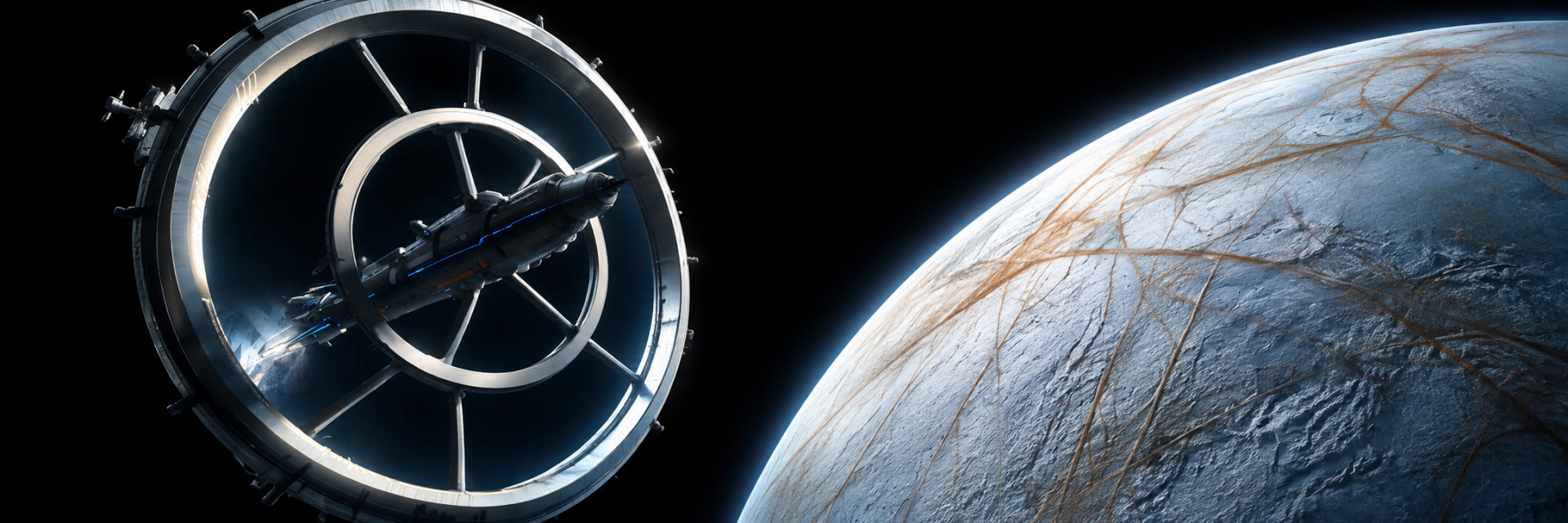
One proposed solution involves rotating spacecraft or habitat sections to create an acceleration that occupants experience as artificial gravity.
The acceleration depends on the rotation rate and distance from the axis of rotation.
Larger rotating structures could produce useful gravitational loading at lower rotation rates, potentially improving comfort and reducing motion-related effects.
However, rotational habitats introduce engineering challenges involving structural forces, moving connections, orientation and human adaptation.
Centrifuge Research
Smaller centrifuges are also being investigated as a way of providing intermittent gravitational loading.
These systems could potentially supplement exercise and other medical countermeasures during long missions.
Artificial gravity remains a credible engineering approach, but its effectiveness as a long-term human health countermeasure requires further investigation.

Food Production and Medical Care in Space
Long-duration habitation will require increasingly reliable methods of producing food and providing medical care without immediate assistance from Earth.
Growing Food Beyond Earth
Controlled-environment agriculture could allow astronauts to cultivate vegetables and other crops using carefully regulated lighting, temperature, water and nutrients.
Hydroponic and aeroponic systems are particularly interesting because they can support plant growth without conventional soil.
Plants could also contribute to atmospheric regeneration by absorbing carbon dioxide and releasing oxygen through photosynthesis.
However, maintaining a complete human diet requires more than growing vegetables. Future food systems must provide sufficient energy, protein, essential fats, vitamins and minerals.
Research into algae, microorganisms and alternative protein production could complement conventional crop cultivation.
Medical Research and Treatment
Long-duration missions introduce challenges involving injury, infection, medication stability, surgical procedures and the effects of reduced gravity on human physiology.
Communication delays between Earth and Mars could prevent medical teams on Earth from providing immediate guidance.
Future habitats may therefore require more autonomous diagnostic equipment, medical monitoring, advanced imaging and procedures that astronauts can perform independently.
Research into tissue engineering, pharmaceutical production and biological processes in microgravity could also contribute to future space medicine.
Psychological Health
Isolation, confined environments, disrupted sleep and prolonged separation from family can affect psychological wellbeing.
Habitat design must therefore consider privacy, social interaction, lighting, recreation and opportunities for meaningful activity.
Human survival beyond Earth involves maintaining physical and psychological health, not simply providing sufficient oxygen and water.

Energy, Resources and Habitat Independence
Space habitats require continuous electrical power for life support, communications, heating, scientific equipment and resource processing.
On the Moon, the long lunar night creates difficulties for solar-powered installations. Mars receives less sunlight than Earth, while atmospheric dust can reduce the effectiveness of solar arrays.
Nuclear and Solar Power
Solar arrays, batteries and fuel cells can provide electricity for spacecraft and surface facilities.
Small nuclear fission reactors are also being developed as a potential source of continuous power, independent of sunlight and local weather conditions.
NASA has identified nuclear fission as the preferred primary surface power technology for its initial human Mars mission architecture.
Reliable energy generation will be particularly important for habitats operating far from established supply networks.
Using Local Resources
In-situ resource utilisation (ISRU) involves extracting or processing materials already available at an exploration destination.
Potential applications include obtaining water from lunar ice deposits, extracting oxygen from local materials and manufacturing useful components from regolith.
On Mars, atmospheric carbon dioxide could provide a feedstock for oxygen production and potentially other chemical processes.
Producing essential resources locally could reduce the mass of supplies transported from Earth and support longer missions.
Maintenance and Manufacturing
Long-term habitation will also require the ability to repair equipment and manufacture replacement components.
Additive manufacturing, robotic maintenance and modular equipment designs could reduce dependence on replacement parts delivered from Earth.
Ultimately, the sustainability of a space habitat will depend on the reliability of its energy systems, the resources it can recover or produce and its ability to continue operating when equipment fails.
The Future of Human Habitation Beyond Earth
The development of space habitats is progressing through a combination of operational experience, ground-based research and emerging spacecraft technologies.
Commercial orbital stations could provide additional opportunities to investigate human health, manufacturing and regenerative life-support systems in microgravity.
Lunar exploration programmes offer a potential environment for testing surface habitats, robotic construction, resource processing and power systems before attempting more distant human missions.
Mars presents a considerably greater challenge. Extended communication delays, limited opportunities for resupply and the difficulty of emergency evacuation would require habitats capable of operating with substantial independence from Earth.
Future settlements may eventually combine regenerative life support, local resource utilisation, automated maintenance, advanced medical systems and increasingly sophisticated radiation protection.
The transition from temporary exploration outposts to sustained habitation will depend on how successfully these technologies can be integrated into reliable systems.
Towards a Sustained Human Presence in Space
Human habitation beyond Earth is not dependent on a single technological breakthrough.
Instead, it requires progress across numerous interconnected fields, including engineering, biology, medicine, robotics, energy production and planetary science.
Existing orbital operations have already demonstrated several essential capabilities. Continuing research into habitat construction, environmental recycling and human physiology is helping establish the scientific and technological foundations for more ambitious missions.
The Moon may provide the first opportunity to demonstrate sustained surface habitation beyond Earth, while Mars remains a longer-term objective.
Together, these developments could gradually transform human spaceflight from relatively short expeditions into an enduring capability to live, work and conduct scientific research beyond our home planet.