

TOI-700 e
TOI-700 e— An Earth-Sized World in the Habitable Zone
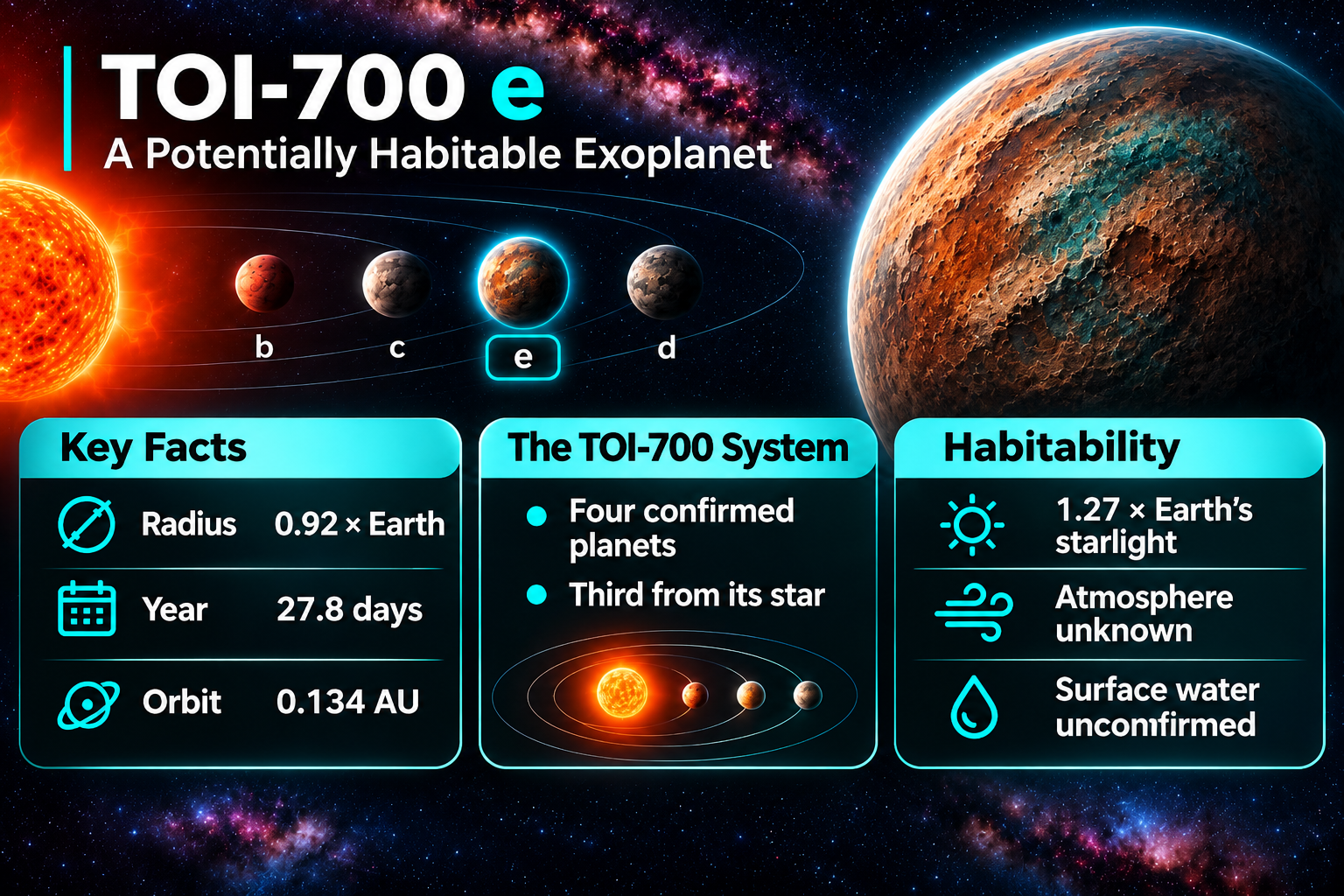
TOI-700 e is a potentially habitable exoplanet approximately 101 light-years from Earth, in the constellation Dorado. Discovered using NASA's Transiting Exoplanet Survey Satellite (TESS) and announced in January 2023, it is one of two known planets orbiting within the habitable zone of the red dwarf TOI-700.
Slightly smaller than Earth, TOI-700 e receives approximately 27% more stellar energy than our planet. Its location within the star's habitable zone makes it an important target for investigating whether rocky planets around red dwarfs could support liquid water and potentially life.
The TOI-700 Planetary System
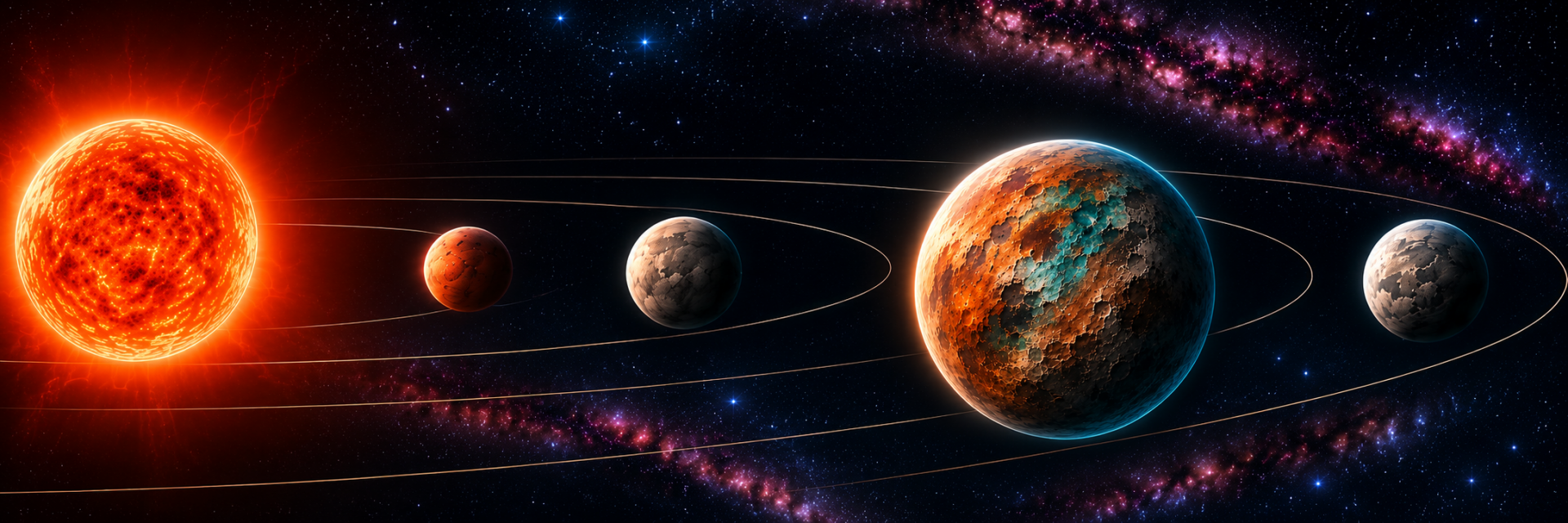
TOI-700 is an M-type red dwarf star approximately 101 light-years away. It has around 42% of the Sun's mass and is considerably cooler and less luminous.
Four planets have been confirmed orbiting the star:
🔍 Click image to enlarge
-
TOI-700 b: An approximately Earth-sized inner planet completing an orbit every 10 days.
-
TOI-700 c: A larger planet, approximately 2.5 times Earth's radius, orbiting every 16 days.
-
TOI-700 e: A likely rocky, Earth-sized planet orbiting within the habitable zone every 27.8 days.
-
TOI-700 d: The outermost confirmed planet, completing an orbit every 37.4 days.
TOI-700 d and TOI-700 e are particularly interesting because both occupy regions where suitable atmospheric conditions could permit liquid water.
The star has exhibited relatively low levels of activity in observations, potentially providing a more favourable environment for atmospheric retention than some highly active red dwarfs.
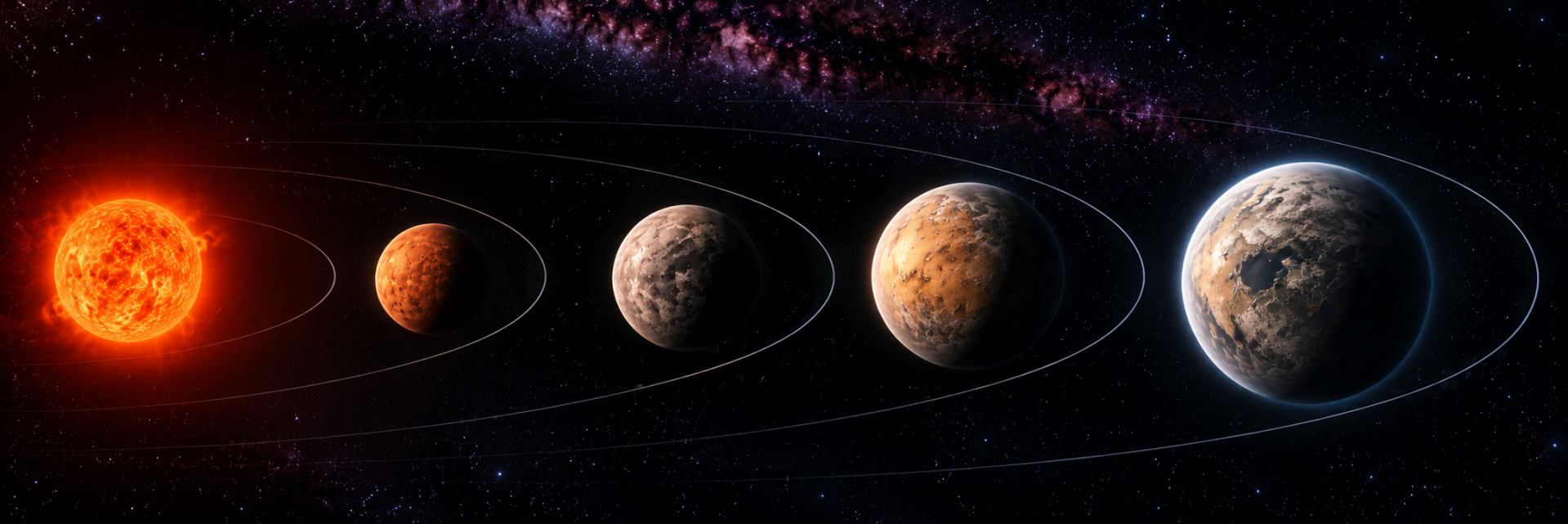
The TOI-700 Planetary System (artist's impression).
The Discovery of TOI-700 e
TOI-700 e was identified through the transit method, which measures tiny reductions in a star's brightness as a planet passes in front of it.
TESS observations revealed the planet's 27.8-day orbital period. Its discovery was particularly significant because it established that TOI-700 contains two small planets within its habitable zone, providing scientists with an opportunity to compare neighbouring worlds exposed to different amounts of stellar radiation.
Size, Mass and Physical Characteristics
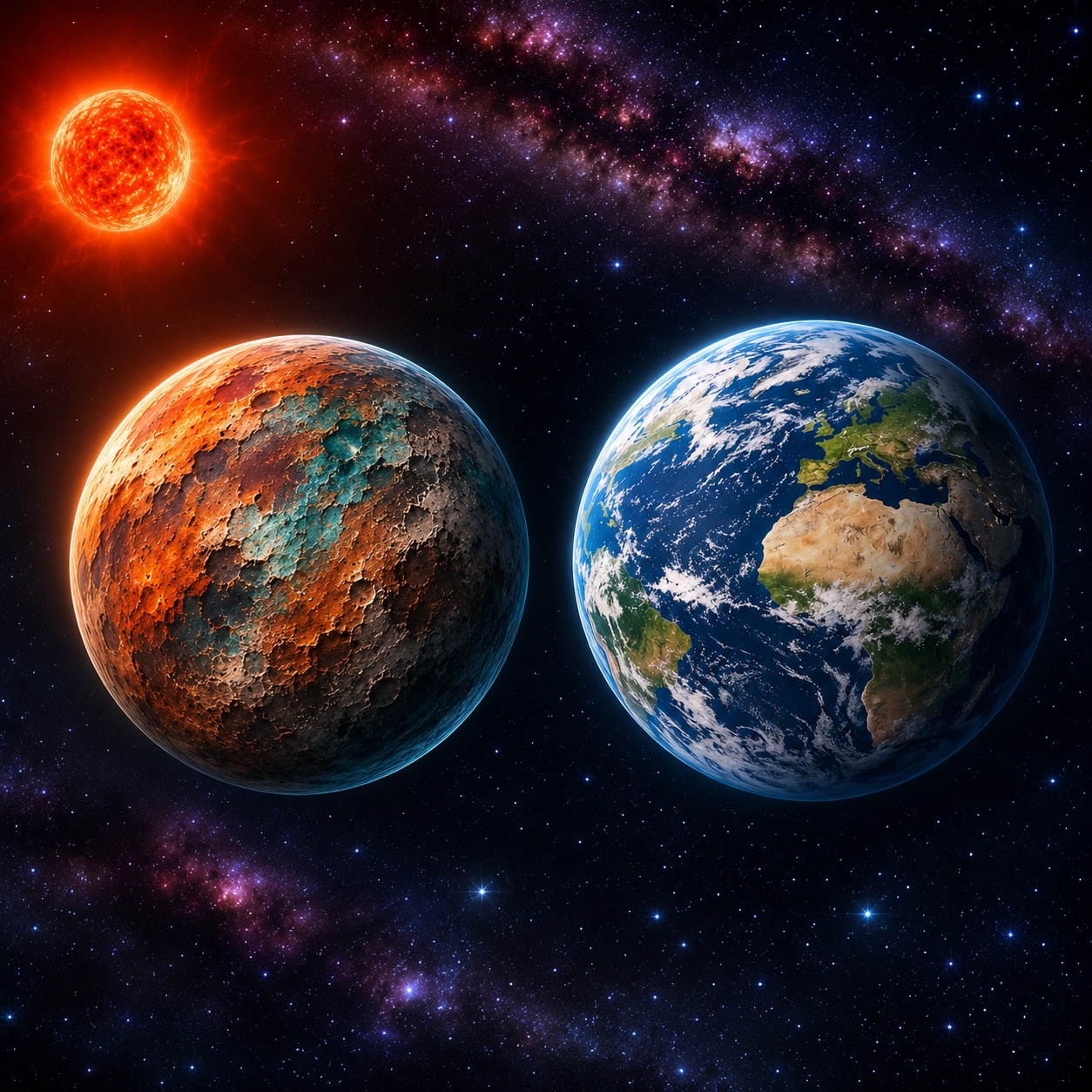
TOI-700 e has a measured radius approximately 92% that of Earth, making it a strong candidate for a rocky terrestrial planet.
Its mass has not been directly established with high precision. NASA's catalogue includes model-derived estimates, but these should not be confused with a confirmed mass measurement.
If TOI-700 e has an Earth-like rocky composition, its surface gravity could be reasonably close to Earth's. Establishing its actual gravity will require better constraints on its mass and internal composition.
Orbit and Tidal Locking
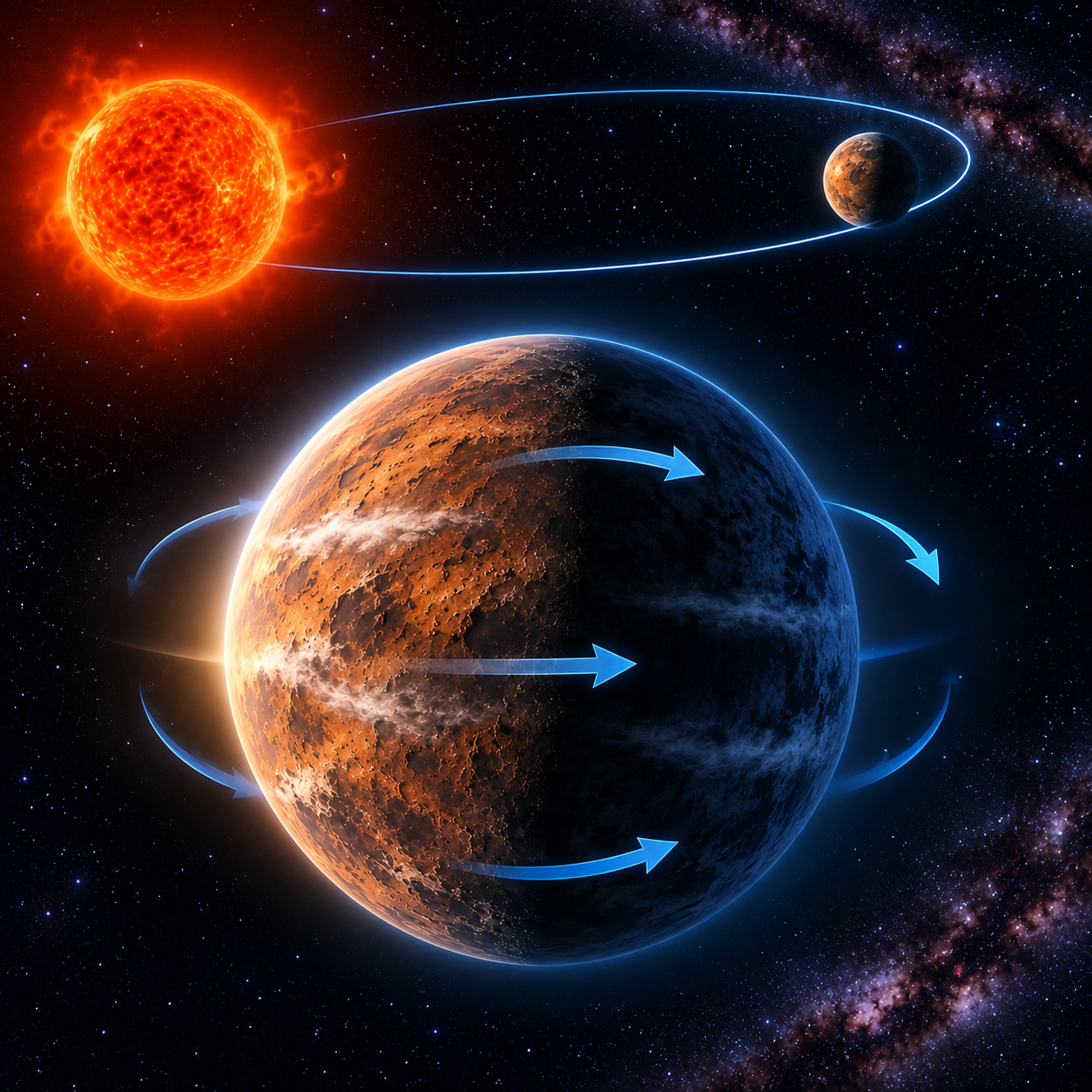
TOI-700 e completes an orbit every 27.81 Earth days at approximately 0.134 astronomical units from its star.
Because the planet orbits so closely, tidal interactions may have synchronised its rotation with its orbital period. If tidally locked, one hemisphere would permanently face the star while the opposite hemisphere would remain in darkness.
A sufficiently substantial atmosphere could transport heat between these regions, potentially moderating temperatures and supporting more complex climate conditions than a simple division between hot and cold hemispheres.

Atmosphere and Climate
The atmosphere of TOI-700 e has not yet been characterised. Its composition, density and ability to retain heat remain important scientific questions.
Climate modelling suggests that planets orbiting red dwarfs can maintain potentially habitable conditions under certain atmospheric scenarios. Carbon dioxide, water vapour, cloud formation and atmospheric circulation could all influence temperatures across the planet.
TOI-700 e receives approximately 1.27 times the stellar radiation reaching Earth. This places it towards the warmer, inner region of the habitable zone, where atmospheric conditions become particularly important for determining whether surface water could remain stable.
Water, Oceans and Ice

Artist's impression.
Liquid water is one of the principal considerations in assessing TOI-700 e's habitability.
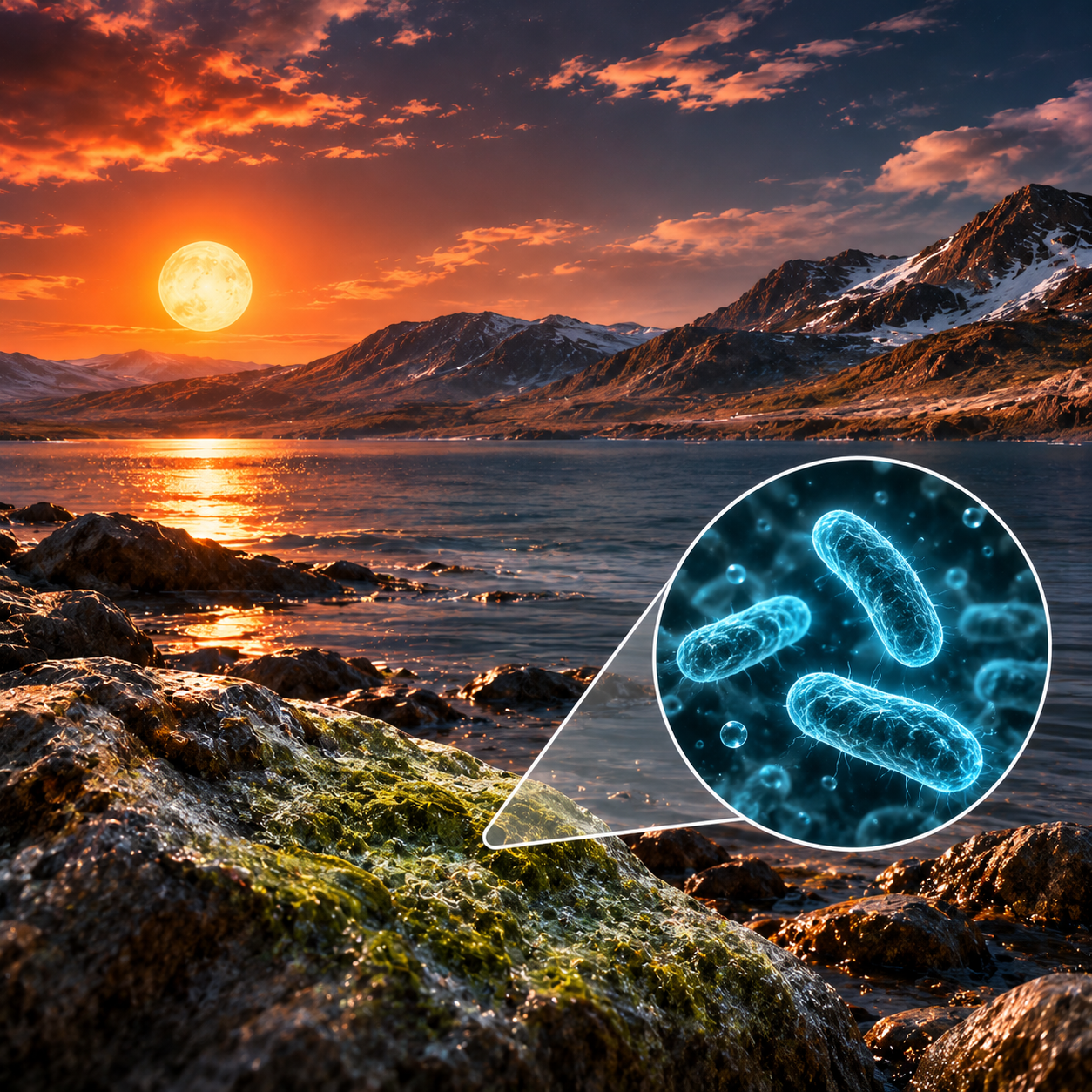
If the planet possesses a suitable atmosphere and sufficient water, oceans or smaller bodies of liquid water might exist on its surface. However, the amount of stellar radiation it receives could make the preservation of surface water more challenging than on TOI-700 d.
On a tidally locked planet, atmospheric and oceanic circulation could redistribute heat, potentially allowing different climatic regions to develop.
The existence of oceans, ice sheets or surface water on TOI-700 e has not been confirmed.
The Search for Life
TOI-700 e is of particular scientific interest because its size suggests a potentially rocky composition, while its orbital position offers plausible conditions for liquid water.
Researchers investigating its habitability would seek evidence of atmospheric gases, water vapour, temperature patterns and possible chemical processes associated with biological activity.
Any assessment of life would depend on understanding the planet's environment, including the behaviour of its host star and the stability of its atmosphere over billions of years.
Space Telescopes and Scientific Observations
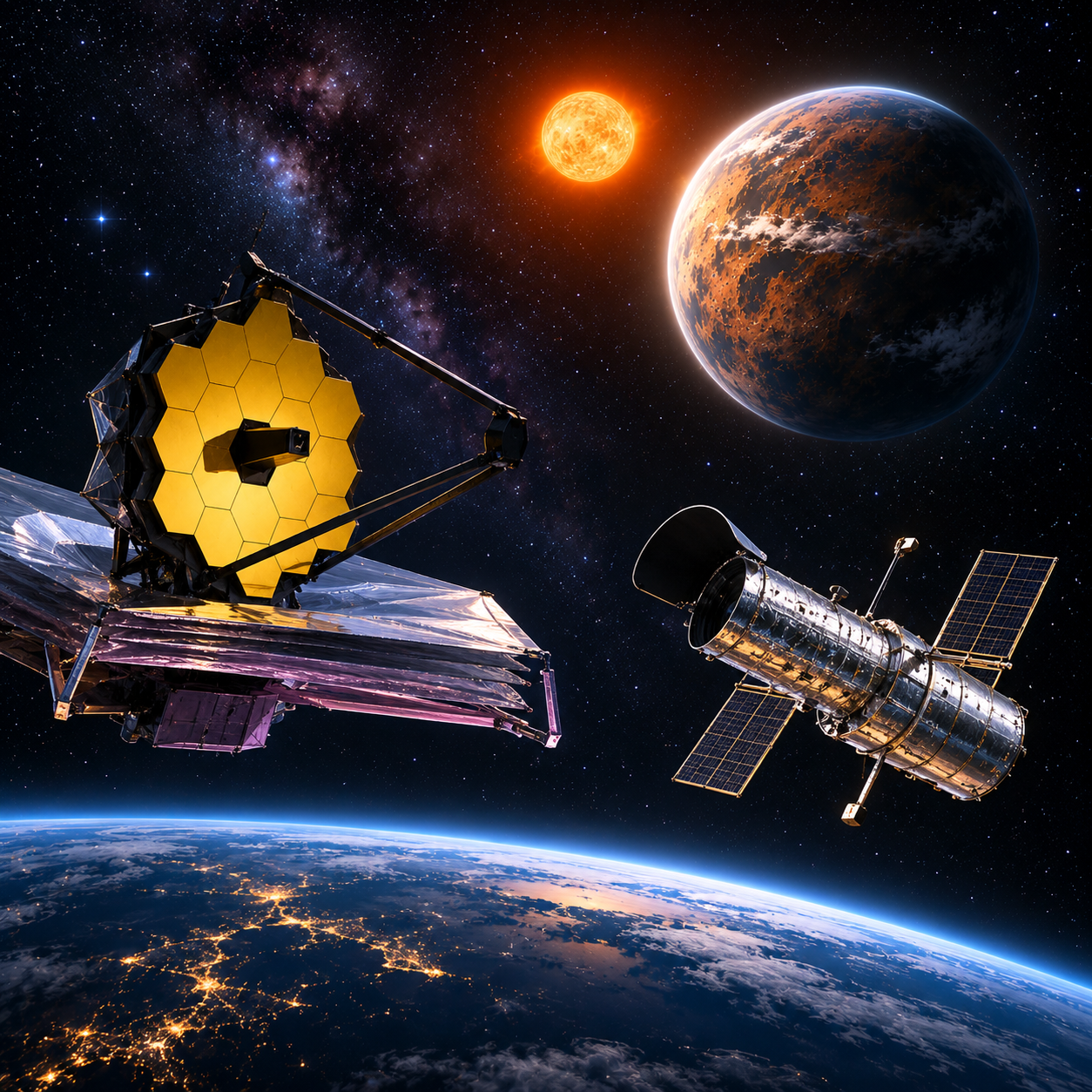
NASA's TESS mission established the existence of TOI-700 e through transit observations.
Future investigations could use instruments such as the James Webb Space Telescope and next-generation observatories to examine the system more closely. Atmospheric spectroscopy would be particularly valuable, although detecting atmospheric signals from such a small and distant planet presents considerable technical challenges.
Additional transit observations and precision radial-velocity measurements could improve estimates of the planet's orbital characteristics, mass and composition.
European Contributions to Exoplanet Research
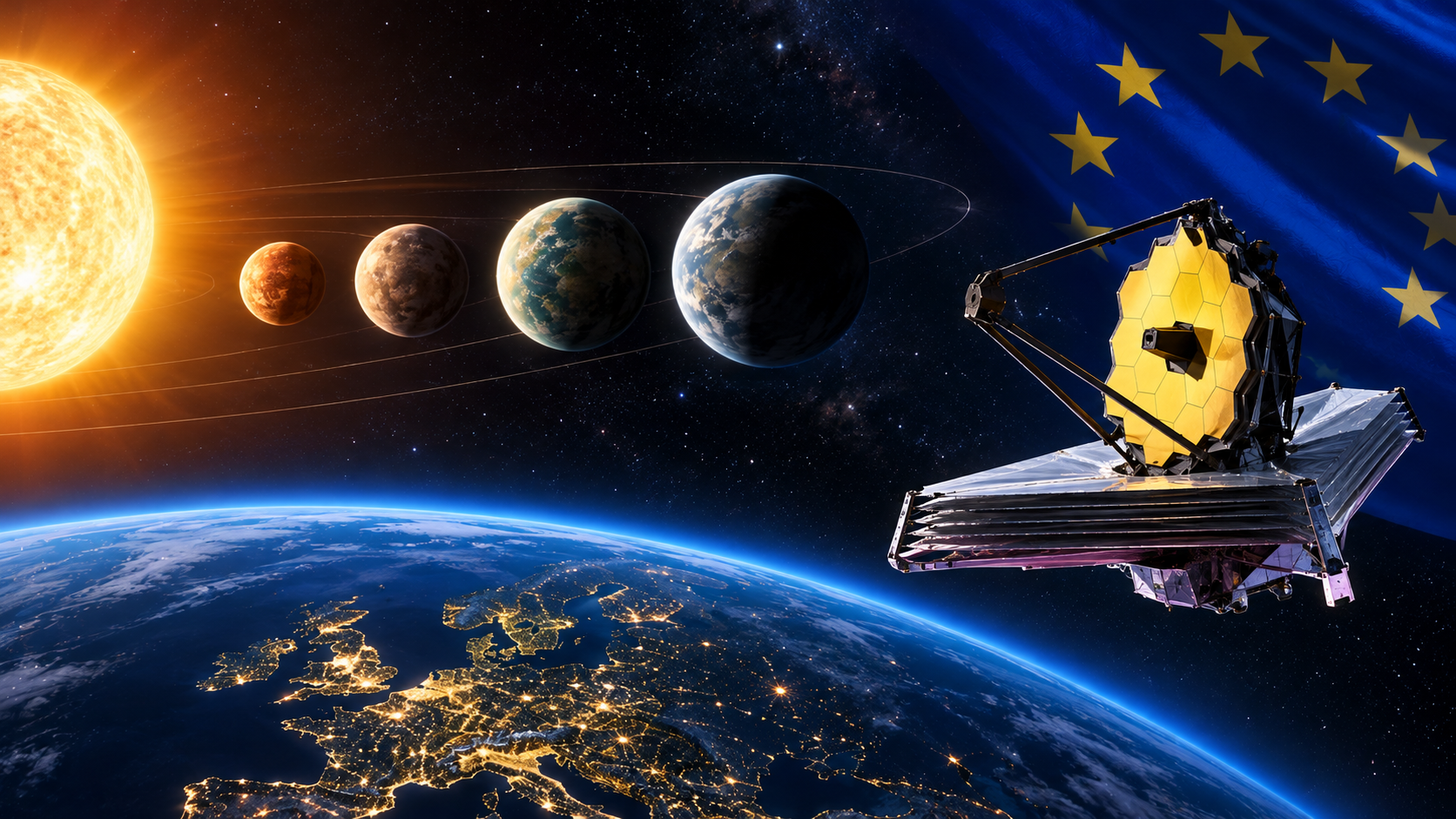
European astronomy contributes significantly to the study of potentially habitable exoplanets.
ESA's CHEOPS mission provides precise measurements of known transiting planets, while the forthcoming PLATO mission is designed to discover and characterise terrestrial planets around a wide range of stars.
The European Extremely Large Telescope, under construction in Chile, is expected to provide powerful capabilities for investigating exoplanetary systems and their physical properties.
These facilities could help advance the broader understanding of rocky planets such as TOI-700 e.

TOI-700 e (artist's impression)
The Future of TOI-700 e Research
TOI-700 e offers scientists an opportunity to investigate how two neighbouring planets within the same habitable zone may develop different environments.
Comparisons between TOI-700 e and TOI-700 d could help establish how differences in stellar radiation, planetary mass, atmospheric composition and orbital distance influence habitability.
Future research priorities include refining the planet's mass, investigating atmospheric retention and assessing whether its surface conditions could permit long-term liquid water.
Latest Updates
2nd November 2026 — TOI-700 e:
The NASA Exoplanet Archive includes revised measurements reported in 2026, placing TOI-700 e's radius at approximately 0.919 Earth radii and its orbital period at 27.810 days. These refinements improve the physical characterisation of the planet, while its atmosphere and surface environment remain subjects for future investigation.
Last reviewed: 2nd November 2026