

RF Systems & Havana Syndrome | 27th November 2026
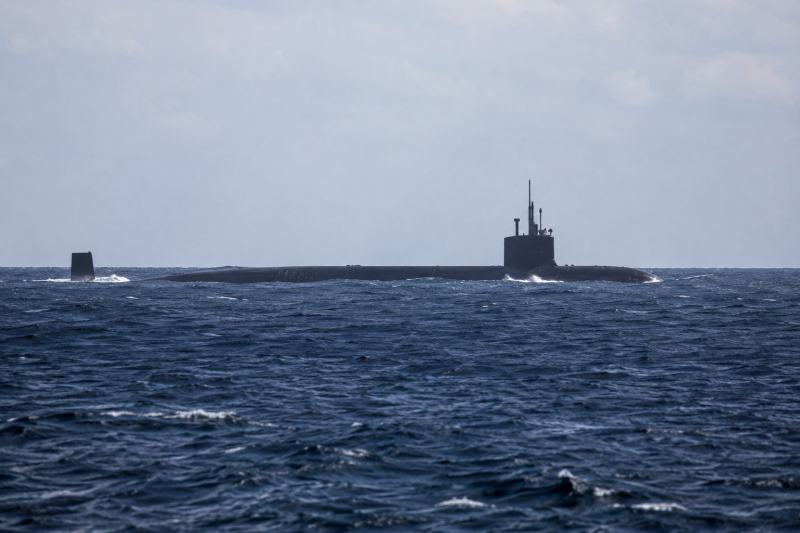
During the Cold War, military researchers developed a communications technology capable of transmitting electromagnetic signals across continents, through seawater and beneath Arctic ice. Known as extremely low frequency (ELF) communications, the technology allowed naval forces to contact submerged nuclear submarines thousands of miles from their transmitters.
Military Origins
The United States Navy began investigating ELF communications in the late 1950s, initially developing the technology under Project Sanguine before subsequent programmes led to the operational Project ELF system.
Two transmitting facilities were established at Clam Lake, Wisconsin, and Republic, Michigan. By 1989, the combined system was fully operational, transmitting encoded messages using a central frequency of approximately 76 Hz.
The Soviet Union developed a comparable system known as ZEVS, located on Russia's Kola Peninsula. Operating at 82 Hz, the installation used two grounded antennas approximately 60 kilometres long.
Although historically referred to as ELF communications, the operating frequencies of both military systems fall within the super low frequency (SLF) band under modern International Telecommunication Union (ITU) classifications. ELF officially covers 3–30 Hz, while SLF covers 30–300 Hz. However, the historical ELF designation remains widely used in military and scientific literature.
How Far Can ELF Signals Travel?
Unlike higher-frequency radio transmissions, ELF signals can propagate over enormous distances through the natural waveguide formed between the Earth's surface and the ionosphere.
Military ELF installations were designed to provide worldwide communications coverage, potentially reaching receivers approximately 20,000 kilometres (12,427 miles) from the transmitting station — equivalent to half the circumference of the Earth.
At 76 Hz, an electromagnetic wave has a free-space wavelength of approximately 3,945 kilometres.
ELF signals can also penetrate seawater to depths of several hundred feet, depending on transmission strength, water conductivity, background noise and receiver sensitivity. This allowed submarines to receive communications without surfacing and potentially revealing their position.
Detection Beyond the Earth's Surface
The reach of military ELF transmissions is not confined to the Earth's surface.
A scientific study published in Advances in Space Research in November 2024 documented the detection of Russia's ZEVS transmitter by the China Seismo-Electromagnetic Satellite (CSES), orbiting approximately 500 kilometres above Earth.
The satellite detected electromagnetic emissions at 82 Hz, demonstrating that signals generated by terrestrial military installations can also penetrate into the upper ionosphere.
Limitations of ELF Communications
Despite their extraordinary range, traditional ELF communications systems had significant limitations. Their extremely low bandwidth meant that transmitting even a short encoded message could take several minutes.
The installations were primarily used to alert submarines to receive further instructions through higher-frequency communications systems rather than transmit conventional voice communications.
Their enormous antenna infrastructure and substantial electricity requirements also made conventional ELF transmitters impractical for mobile deployment.
The Legacy of Military ELF Technology
The United States discontinued its operational ELF submarine communications system in 2004. However, research into extremely low frequency electromagnetic propagation remains relevant to communications, geophysics and ionospheric science.
The historical military application of ELF demonstrates how electromagnetic signals can travel across the planet, penetrate conductive environments and reach satellites hundreds of kilometres above the Earth's surface.