

RF Systems & Havana Syndrome | 27th November 2026
The Institute of Electrical and Electronics Engineers (IEEE) has highlighted the importance of the interconnected technologies that keep modern transport networks operating safely and efficiently.
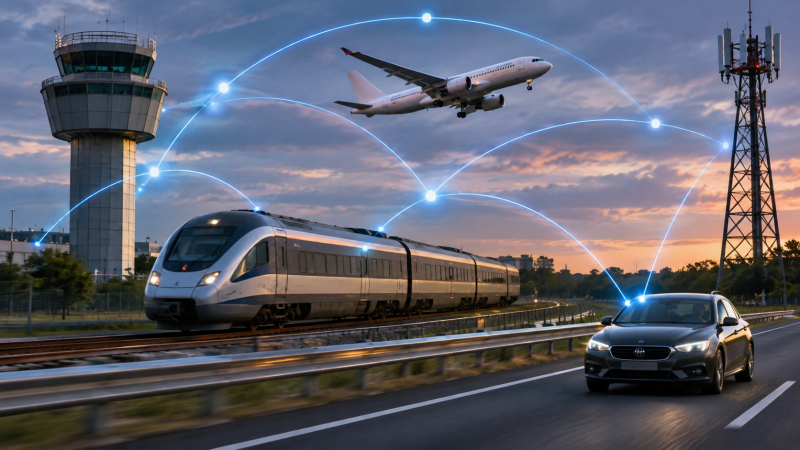
From aviation and railway signalling to connected vehicles, radio frequency (RF) systems underpin much of the world's transport infrastructure, enabling the wireless transmission of information between vehicles, control centres and monitoring equipment.
In aviation, radar systems use radio waves to detect and track aircraft, while radio communications and technologies such as Automatic Dependent Surveillance–Broadcast (ADS-B) allow aircraft to transmit information about their position, altitude and speed.
Railway networks use wireless communications alongside signalling and train control systems to coordinate movements, maintain safe separation and communicate operational information.
Road transport is also becoming increasingly connected through vehicle-to-everything (V2X) technology, allowing compatible vehicles to exchange information with other vehicles and roadside infrastructure, potentially improving safety and traffic management.
International technical standards help ensure that equipment developed by different manufacturers can communicate reliably and securely.
As transport becomes increasingly automated and interconnected, protecting these networks against electromagnetic interference, signal jamming and cyberattacks will become increasingly important.
Although largely invisible to passengers, radio frequency technologies remain fundamental to the safe and efficient movement of people and goods worldwide.
Source: "Institute of Electrical and Electronics Engineers (IEEE)"