

Technology & Cybersecurity | 21st November 2026
Japan's RIKEN research institute has confirmed that attackers stole 430 authentication keys during a cyberattack on the country's Fugaku supercomputer, raising concerns about the security of other research and computing systems.
In an investigation update published on 20th November, RIKEN revealed that the stolen credentials included 233 SSH private keys without passphrases and 197 protected by passphrases.
The keys were stored in users' home directories and could potentially provide access to external supercomputers, cloud services and other computing infrastructure.
RIKEN confirmed evidence of connections to external systems using some compromised credentials but said it had not identified further instances of misuse.
The attack took place between 10th and 13th November, when an unidentified third party gained access to Fugaku's internal operational network through a publicly accessible system-status dashboard.
Investigators subsequently discovered that several internal servers had been altered and malicious software installed.
The latest investigation also identified traces of unauthorised access to personal information belonging to Fugaku users, including names, contact details, institutional affiliations and account-registration records.
RIKEN is treating information relating to 4,222 Fugaku users as potentially compromised, although it has not confirmed that all their personal information was removed from the system.
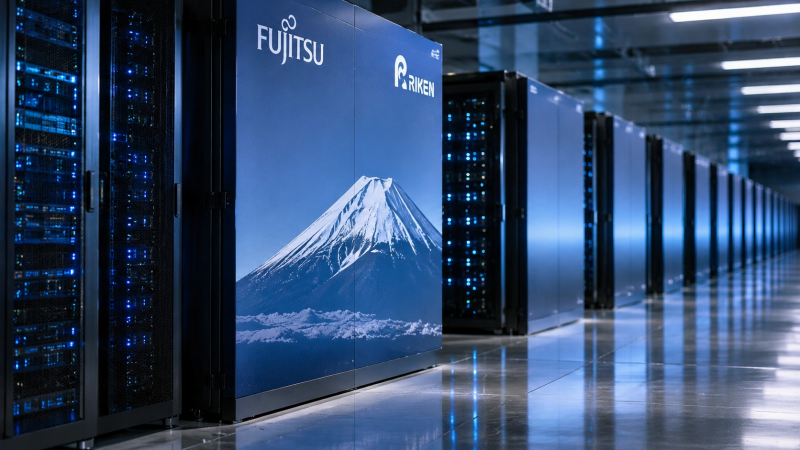
Fugaku, developed by Fujitsu and operated by RIKEN, is one of Japan's most important scientific computing facilities. It supports research across medicine, climate modelling, materials science and other computationally demanding fields.
The supercomputer was shut down on 14th November, and no date has been confirmed for its return to operation.
RIKEN is contacting affected users and requesting that compromised authentication keys be revoked and replaced. It also plans to rebuild affected servers, separate public-facing services from administrative networks and establish an investigation committee involving external experts.
The incident highlights the risks posed when credentials used across multiple research institutions are compromised, potentially extending the consequences of a cyberattack beyond its original target.
RIKEN's investigation remains ongoing, and the full extent of any secondary damage has yet to be established.