

Technology & Cybersecurity | 15th November 2026
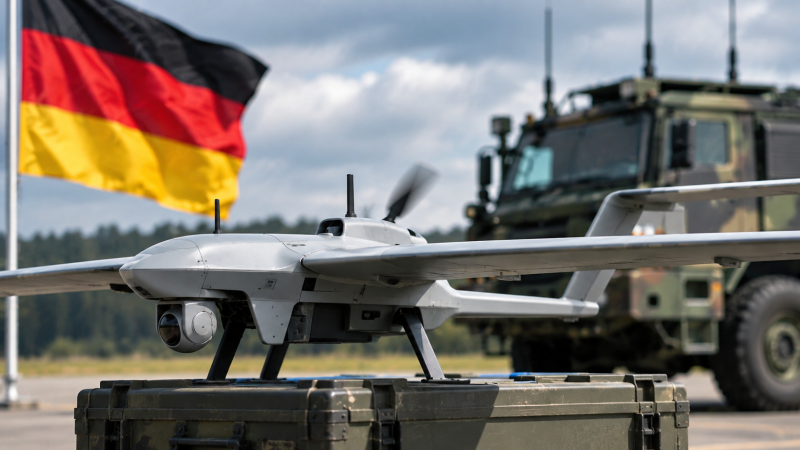
German military drones have returned to service after a cyberattack on defence manufacturer Quantum Systems prompted the Bundeswehr to temporarily suspend their operations.
The German company, based in Gilching near Munich, confirmed on 12th November that it had detected a cybersecurity incident in late October. An internal investigation identified an active attack by unidentified hostile actors.
Quantum Systems said its IT and security teams had contained the threat in cooperation with German authorities. The company subsequently confirmed on 13th November that its unmanned aircraft were operating normally worldwide, including those used by the Bundeswehr.
According to reports by Der Spiegel and the Financial Times, the attackers compromised a server used to distribute updates for QBase, the company's ground-control and mission-planning software.
The reported intrusion involved malicious software placed within the update system. However, the company has not publicly confirmed these technical details, and it remains unclear how many customers received or installed the affected update.
The Bundeswehr grounded its Quantum Systems drones as a precaution, reportedly preventing the manufacturer from participating in a recent military exercise. The German military has not independently confirmed the resumption of flights.
Quantum Systems manufactures reconnaissance and interceptor drones, including the Vector aircraft operated by Germany and supplied to Ukraine. The company has also expanded its manufacturing activities in Ukraine, where its technology supports efforts to counter Russian drones.
German authorities are investigating the incident. The Bamberg public prosecutor's office has opened a criminal investigation, while German security agencies are examining the circumstances of the attack.
Although Quantum Systems has highlighted persistent cyber threats against European defence manufacturers supporting Ukraine, no individual, organisation or state has been publicly identified as responsible.
The incident demonstrates how an attack on a manufacturer's software infrastructure can disrupt military operations even without confirmed interference with the aircraft themselves.