

Science & Human Cognition |Personal Insights | 14th November 2026
When I remember somewhere from my past, I don't simply recall what it looked like. I can mentally return to that place, move around it, change my viewpoint and experience aspects of the environment almost as though I were there again.
An old classroom from more than twenty years ago is a good example. I can visualise the room, move through it and look at different areas from different perspectives. I can even change my viewpoint to see myself standing within the memory, almost like controlling a character in a computer game.
I believe this is partly because I've experienced these environments from so many different positions. Over time, my mind appears to have combined those perspectives into something resembling a three-dimensional reconstruction.
My memories aren't exclusively visual, either. I can recall the smell of chewing gum, the feeling of woodwork and other sensory details associated with a particular place. These sensations are less intense than experiencing them physically, but they remain recognisable within my consciousness.
I'm autistic and experience sensory sensitivity, which may influence how I perceive and remember my surroundings. However, sensory sensitivity and vivid mental imagery aren't necessarily the same thing, and I wouldn't assume that autism alone explains how my mind works.
Visualisation is also central to how I approach everyday life. I regularly construct plans, consider possibilities and mentally explore different outcomes before acting. This happens throughout the day, often without any deliberate effort to begin visualising.
This way of thinking plays an important role in how I learn and develop ideas. Rather than approaching every problem as a series of written instructions, I can mentally construct possibilities, explore different approaches and consider how individual elements might work together.
When developing my MarBro website, for example, I can visualise layouts, imagine changes to pages and consider how different sections might fit together before implementing them. The same approach helps when researching scientific subjects, exploring theories or planning practical tasks.
Artificial intelligence has become another useful part of this process. It allows me to explore ideas, examine information, challenge assumptions and turn mental concepts into written articles, documents and practical projects. Rather than replacing my thinking, I use it to support and extend what I'm already considering.
This has been particularly valuable because I've experienced difficulties with memory, confusion and sleep deprivation. Although these challenges can affect everyday life, combining visual thinking with external tools has helped me continue learning, organising information and completing projects.
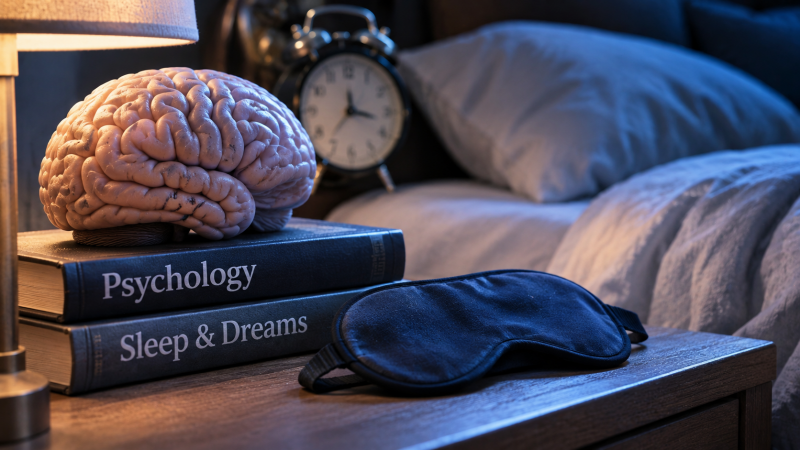
Interestingly, my thinking sometimes continues while I'm asleep.
During dreams, I can become fully aware that I'm dreaming while the visual experience continues. I can consciously think about something, change the subject or consider plans for the following day. Sometimes I recognise that I'll soon be waking up and begin thinking about practical tasks, such as cleaning the pond filters.
On occasions, I wake up and begin my day using plans I've already considered during sleep.
This experience appears consistent with lucid dreaming, where someone becomes aware that they're dreaming. However, my interest isn't necessarily in controlling the dream itself. It's the apparent continuity between my waking thoughts and conscious experiences during sleep.
Neuroscience offers several concepts that may help explain these experiences. The hippocampus and associated brain networks contribute to spatial memory, navigation and the reconstruction of remembered environments. Researchers also distinguish between first-person and observer perspectives in autobiographical memory.
Another relevant concept is hyperphantasia, which describes exceptionally vivid voluntary mental imagery. Some of my experiences appear consistent with this, although I haven't undergone a formal assessment and wouldn't claim to have established it.
It's also important to recognise that vivid memories aren't necessarily accurate recordings. The brain reconstructs past experiences, potentially combining genuine details with information inferred or imagined later.
For me, the most interesting aspect is how naturally these processes fit together.
I don't experience memories simply as stored information, or plans merely as lists of things to do. I can explore environments, imagine possibilities, revisit experiences and consider future decisions through an internal world that feels spatially detailed and accessible.
This way of thinking has become part of how I learn, create and solve problems. It doesn't mean every idea is correct or every memory is accurate, but it provides a valuable starting point for exploring possibilities and developing them into something practical.
It's how I remember the past, consider the present and visualise the future.
And although I can't know precisely how other people experience their own thoughts, understanding these differences has made me increasingly interested in how human consciousness, memory and imagination work.
Add comment
Comments